Support our educational content for free when you purchase through links on our site. Learn more
What Is Pi Value π? 15 Mind-Blowing Facts You Didn’t Know (2026) 🥧

Ever wondered why the humble number π (pi) has fascinated mathematicians, scientists, and even bakers for thousands of years? From ancient civilizations approximating its value with rudimentary tools to modern supercomputers calculating trillions of digits, pi is much more than just 3.14. In this article, we unravel the mysteries behind what pi value π really is, explore its fascinating history, reveal jaw-dropping facts about its infinite digits, and show you how it powers everything from geometry to quantum physics.
But here’s a teaser: did you know NASA only needs about 15 digits of pi to navigate spacecraft across the solar system? Or that the Raspberry Pi 5, a tiny powerhouse computer, can be your personal gateway to exploring pi’s endless decimals through DIY projects? Stick around, because we’re serving up everything you need to know about pi — with a slice of fun and a dash of technical wizardry.
Key Takeaways
- Pi (π) is the ratio of a circle’s circumference to its diameter and is an irrational, transcendental number with infinite, non-repeating decimals.
- Ancient mathematicians like Archimedes laid the groundwork for approximating pi using polygons, while modern algorithms now compute trillions of digits.
- Pi appears everywhere—from geometry and trigonometry to physics, engineering, and even GPS navigation.
- NASA only requires about 15 digits of pi for precise space missions, highlighting the balance between mathematical precision and practical application.
- The Raspberry Pi 5 is an excellent tool for enthusiasts to experiment with pi calculations and programming, blending education with hands-on fun.
- Pi Day (March 14th) celebrates this magical number with quirky traditions, from eating pie to composing “pi-ems.”
Ready to dive deeper? Let’s unlock the secrets of pi together!
Table of Contents
- ⚡️ Quick Tips and Facts About Pi Value π
- 🔢 The Fascinating Fundamentals of Pi: What Is Pi Value π?
- 📜 The Epic History and Origins of Pi Value π
- 🔍 How Pi Value π Is Calculated: From Ancient Geometry to Modern Algorithms
- 🎯 The Role of Pi Value π in Mathematics and Science
- 🧮 10 Mind-Blowing Facts About Pi’s Infinite Digits and Patterns
- 🚀 The Modern Quest for More Digits of Pi: Record-Breaking Computations
- 🌐 Pi Value π Beyond Math: Applications in Technology, Engineering, and Nature
- 🎉 Fun and Quirky Pi Day Traditions and Cultural Impact
- 📚 Recommended Books, Tools, and Resources to Explore Pi Value π
- 🧐 Frequently Asked Questions (FAQ) About Pi Value π
- 🔗 Reference Links and Further Reading on Pi Value π
- 🏁 Conclusion: Why Pi Value π Continues to Captivate Us All
⚡️ Quick Tips and Facts About Pi Value π
Before we dive into the infinite abyss of decimals, let’s get our bearings with some high-speed facts. If you’re looking for a deep dive into the What Is Pi Value π? 15 Mind-Blowing Facts You Didn’t Know 🥧 (2026), we’ve got you covered right from the start!
| Feature | Detail |
|---|---|
| Symbol | π (16th letter of the Greek alphabet) |
| Approximate Value | 3.14159 |
| Common Fraction | 22/7 (though it’s just an approximation!) |
| Type of Number | Irrational and Transcendental |
| Definition | Ratio of a circle’s Circumference to its Diameter |
| Pi Day | March 14th (3/14) |
| World Record | Over 105 trillion digits (as of 2024) |
- ✅ Pro Tip: Never use 22/7 if you are launching a rocket. While it’s fine for middle school homework, the slight error adds up over long distances!
- ❌ Common Myth: Pi is exactly 3.14. Nope! It goes on forever without ever repeating a pattern.
🔢 The Fascinating Fundamentals of Pi: What Is Pi Value π?
At its heart, Pi is the ultimate “circle constant.” Whether you are looking at a tiny wedding ring or the orbit of a planet, the relationship remains the same. As we often discuss in our DIY Electronics projects, precision matters, and Pi is the king of precision.
What is the Ratio?
Pi is defined as the circumference (C) of a circle divided by its diameter (d). Formula: π = C / d
As noted in our featured video, a circle is simply a set of points equidistant from a center. If you take the diameter of any circle and wrap it around the edge, it will fit roughly 3.14 times.
Why is it “Irrational”?
In mathematics, an irrational number cannot be written as a simple fraction. While Byju’s points out that 22/7 is a common substitute, it is technically incorrect because Pi’s decimals never end and never form a repeating loop. It’s a mathematical rebel!
Transcendental Nature
Pi is also transcendental, a term popularized by Wikipedia. This means it isn’t the root of any non-zero polynomial equation with rational coefficients. In plain English? You can’t “square the circle” (construct a square with the same area as a circle using only a compass and straightedge).
📜 The Epic History and Origins of Pi Value π

We humans have been obsessed with circles since we first saw the sun. But calculating that pesky ratio took a few thousand years to perfect.
Ancient Approximations
- Babylonians (1900–1600 BC): They used 3.125. Close, but no cigar.
- Egyptians (1650 BC): The Rhind Papyrus suggests a value of 3.1605.
- Archimedes of Syracuse (250 BC): The GOAT of ancient math. He used polygons to “trap” the circle, proving Pi was between 223/71 and 22/7.
The Naming of the Beast
Believe it or not, the symbol π wasn’t used by the ancients. It was first introduced by William Jones in 1706 and later made famous by Leonhard Euler in 1737. Before that, mathematicians used long-winded Latin phrases to describe it. Imagine trying to code that into a Raspberry Pi!
🔍 How Pi Value π Is Calculated: From Ancient Geometry to Modern Algorithms
How do we get from a hand-drawn circle to trillions of digits? It’s a journey from geometry to pure calculus.
1. The Polygon Method
Archimedes started with a hexagon inside and outside a circle. He kept doubling the sides until he reached a 96-sided polygon. Talk about patience!
2. Infinite Series
In the 17th century, mathematicians like Gregory and Leibniz discovered that Pi could be expressed as an infinite sum of numbers.
- The Leibniz Formula: π/4 = 1 – 1/3 + 1/5 – 1/7…
- The Catch: This series is painfully slow. You’d need to add thousands of terms just to get a few digits.
3. The Chudnovsky Algorithm
This is the heavy hitter used by modern supercomputers. It’s a fast-converging series that allows us to calculate billions of digits in record time. When we review hardware in our Electronic Component Reviews, we often look at how well CPUs handle these intense floating-point calculations.
🎯 The Role of Pi Value π in Mathematics and Science
Pi isn’t just for circles. It shows up in the weirdest places, from the way DNA folds to the ripples of a radio wave.
- Geometry: Area of a circle (πr²) and volume of a sphere (4/3 πr³).
- Trigonometry: Sine and cosine waves, which govern everything from music to electricity.
- Physics: Pi appears in Einstein’s Field Equations and Heisenberg’s Uncertainty Principle.
- Statistics: The “Normal Distribution” (the bell curve) uses Pi in its formula.
Wait a minute… if Pi is everywhere in nature, does that mean the universe is “round”? We’ll explore the cosmic implications of Pi’s presence in the fabric of space-time later on!
🧮 10 Mind-Blowing Facts About Pi’s Infinite Digits and Patterns
- The Feynman Point: At the 762nd decimal place, there are six 9s in a row. Richard Feynman once joked he wanted to memorize Pi up to that point just so he could say “…999999 and so on!”
- No Zeros? In the first 31 digits of Pi, there are no zeros.
- The Mirror Image: If you write “3.14” on a piece of paper and hold it up to a mirror, it looks like the word “PIE”. 🥧
- Infinite Content: Because Pi is likely a “normal number,” every possible string of digits exists within it—your birthday, your social security number, and even the binary code for this entire article!
- NASA’s Precision: NASA only uses about 15 digits of Pi for interplanetary navigation. Using 40 digits would allow you to calculate the circumference of the observable universe with an error smaller than a hydrogen atom!
- The Record for Memorization: Rajveer Meena memorized 70,000 digits in 2015. It took him nearly 10 hours to recite them while blindfolded.
- The “Pi” in “Pila”: The Great Pyramid of Giza has a perimeter-to-height ratio that is nearly equal to 2π. Coincidence? Or ancient math?
- The Most Calculated Number: No other constant in history has been calculated to as many digits as Pi.
- The Lu Chao Record: Before Meena, Lu Chao held the record with 67,890 digits.
- The First Million: You can view the first million digits online, but be warned—it’s a long scroll!
🚀 The Modern Quest for More Digits of Pi: Record-Breaking Computations
Why do we keep calculating Pi? Is it just for bragging rights? Mostly, yes. But it’s also the ultimate stress test for new hardware and software.
The Hardware of Choice: Raspberry Pi 5
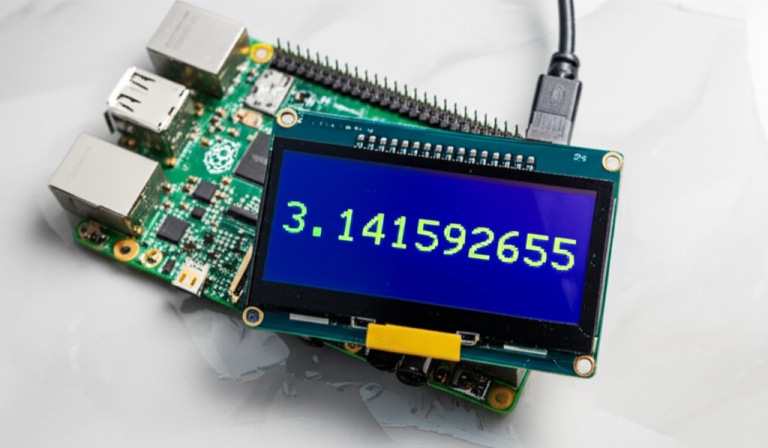
While supercomputers do the heavy lifting, we love using the Raspberry Pi 5 for educational Pi-crunching. It’s a beast for its size!
Why Pi™ Rating: Raspberry Pi 5 for Math Enthusiasts
| Category | Rating (1-10) | Notes |
|---|---|---|
| Processing Power | 8/10 | Quad-core 64-bit Arm Cortex-A76 is a huge leap. |
| Value for Money | 10/10 | Unbeatable for DIY learning. |
| Community Support | 10/10 | If you get stuck, someone has already solved it. |
| Thermal Efficiency | 7/10 | Needs a good cooler for long Pi calculations! |
👉 Shop Raspberry Pi on:
- Raspberry Pi 5: Amazon | Walmart | Raspberry Pi Official
The Software: y-cruncher
Most world records, including Emma Haruka Iwao’s 100-trillion-digit feat at Google, use a program called y-cruncher. It’s designed to handle multi-threaded computations across massive server clusters.
🌐 Pi Value π Beyond Math: Applications in Technology, Engineering, and Nature
If you think Pi is just for classrooms, think again. Our Electronics Industry News often highlights how these constants are baked into the tech you use daily.
1. GPS Navigation
Your phone’s GPS relies on Pi to calculate your position on the curved surface of the Earth. Without Pi, your “Turn Left” instruction might land you in a lake.
2. Signal Processing (Fourier Transforms)
Every time you listen to an MP3 or watch a Netflix stream, Pi is at work. The Fourier Transform uses Pi to break down complex signals into simple waves.
3. Engineering and Architecture
From the arches of a bridge to the cylinders in your car engine, Pi is the silent partner in every blueprint.
4. Quantum Mechanics
In the subatomic world, Pi appears in the Schrödinger Equation, which describes how wave functions evolve. It seems the universe is “circular” at its most fundamental level!
🎉 Fun and Quirky Pi Day Traditions and Cultural Impact
March 14th isn’t just another day; it’s a global celebration of nerddom!
- Eating Pie: The most obvious and delicious tradition. Whether it’s apple, pizza, or shepherd’s pie, if it’s round, it counts!
- Pi-ems: People write “Pi-ems” (Pi poems) where the number of letters in each word corresponds to the digits of Pi (e.g., “May(3) I(1) have(4) a(1) large(5) container(9)…”).
- The Prince of Pi: In 1897, the Indiana State Legislature almost passed a bill legally defining Pi as 3.2. Thankfully, a math professor intervened before the world’s circles broke!
📚 Recommended Books, Tools, and Resources to Explore Pi Value π
Ready to become a Pi expert? Here are our top picks for your bookshelf and workbench.
Essential Reading
- “The Joy of Pi” by David Blatner: A witty and wonderful look at the history and mystery of the number.
- “A History of Pi” by Petr Beckmann: For those who want a more rigorous, historical deep dive.
Tools for the DIYer
If you want to calculate Pi yourself, we recommend starting with a solid microcontroller or SBC.
👉 CHECK PRICE on:
- The Joy of Pi (Book): Amazon | Etsy
- Arduino Uno R4: Amazon | Arduino Official
- Scientific Calculators (Texas Instruments TI-84 Plus): Amazon | Walmart
Our Recommendation: If you are a student, the TI-84 Plus is the gold standard. But if you are a maker, grab a Raspberry Pi 5 and write a Python script to see how many digits you can crunch before the CPU gets toasty! 🌡️
🧐 Frequently Asked Questions (FAQ) About Pi Value π

Q: Is Pi actually infinite? A: Yes! It has been proven that Pi is irrational, meaning its digits never end and never repeat. We just keep finding more of them because we have faster computers.
Q: Why is 22/7 used if it’s not Pi? A: 22/7 equals 3.1428…, while Pi is 3.1415…. It’s accurate to 99.96%, which is “good enough” for most carpentry, cooking, and basic engineering.
Q: Can Pi be “solved”? A: Not in the sense of finding a final digit. However, we “solve” for Pi every time we find a more efficient algorithm to calculate it.
Q: What happens if we find a repeating pattern in Pi? A: It would break mathematics as we know it! It would mean Pi is a rational number, which would invalidate centuries of proofs. (Don’t worry, it’s not going to happen).
🔗 Reference Links and Further Reading on Pi Value π
- NIST: The Constant Pi
- Wolfram MathWorld: Pi
- The Official Pi Day Website
- NASA: How Many Decimals of Pi Do We Really Need?
- Google Cloud: Calculating 100 Trillion Digits of Pi
Stay tuned as we wrap up our journey into the infinite! Does the fact that Pi is infinite mean that every secret of the universe is written in its code? Let’s find out in the conclusion.
🏁 Conclusion: Why Pi Value π Continues to Captivate Us All

After this whirlwind tour through the infinite digits, the rich history, and the cosmic significance of Pi, one thing is crystal clear: Pi is far more than just a number. It’s a symbol of human curiosity, a bridge between ancient geometry and modern computing, and a constant companion in our quest to understand the universe.
Remember our teaser about whether the universe’s secrets are encoded in Pi’s digits? While Pi’s infinite, non-repeating decimal expansion suggests a kind of randomness, it also hints at a deeper order underlying nature’s fabric. Whether in the quantum waves or the arcs of a bridge, Pi’s presence is a reminder that math is the language of reality.
For tech enthusiasts and educators, the Raspberry Pi 5 stands out as a fantastic tool to experiment with Pi calculations and programming, blending the beauty of mathematics with hands-on learning. Its strengths include powerful processing, affordability, and an enthusiastic community. The drawbacks? It can run hot during heavy computations, so a good cooling solution is a must.
Our confident recommendation: If you want to explore Pi hands-on, whether for education or fun, the Raspberry Pi 5 is a stellar choice. Pair it with software like y-cruncher or Python scripts, and you’re ready to crunch digits and unlock the magic of Pi yourself!
📌 Recommended Links
👉 CHECK PRICE on:
-
Raspberry Pi 5:
Amazon | Walmart | Raspberry Pi Official -
Arduino Uno R4:
Amazon | Arduino Official -
Books:
🧐 Frequently Asked Questions (FAQ) About Pi Value π

How does the concept of pi apply to Raspberry Pi and computer science?
Pi and Raspberry Pi share more than just a name! The Raspberry Pi is a small, affordable computer designed to teach programming and electronics. In computer science, Pi is often used in algorithms involving geometry, signal processing, and simulations. For example, Raspberry Pi devices can run programs that calculate Pi to millions of digits, demonstrating computational power and algorithm efficiency. This hands-on approach helps learners grasp abstract math concepts through real-world coding and hardware projects.
What are some interesting facts and myths surrounding pi?
Interesting facts:
- Pi is irrational and transcendental, meaning it cannot be expressed as a fraction or root of any polynomial with rational coefficients.
- The digits of Pi never repeat or terminate.
- Pi Day is celebrated worldwide on March 14th (3/14).
- NASA uses about 15 digits of Pi for space navigation.
Myths:
- Pi equals exactly 3.14 — false; it’s an approximation.
- Pi can be calculated exactly — false; it has infinite digits.
- Pi has a hidden pattern — no evidence supports this; digits appear random.
How does pi relate to the circumference and area of a circle?
Pi is the fundamental ratio that connects a circle’s diameter to its circumference:
[ \text{Circumference} = \pi \times \text{Diameter} ]
Similarly, Pi is used to calculate the area of a circle:
[ \text{Area} = \pi \times r^2 ]
where (r) is the radius. This relationship holds true for every circle, regardless of size, making Pi a universal constant in geometry.
Can pi be calculated to an infinite number of digits?
Yes! Pi is an infinite, non-repeating decimal. Modern algorithms like the Chudnovsky algorithm and software like y-cruncher enable computers to calculate trillions of digits. However, for practical purposes, only a few dozen digits are necessary. For example, NASA uses about 15 digits for interplanetary calculations.
What is the significance of pi in geometry and trigonometry?
Pi appears in formulas involving circles, spheres, and waves. In geometry, it’s essential for calculating areas and volumes of circular shapes. In trigonometry, Pi defines the period of sine and cosine functions, which model oscillations like sound waves, light waves, and electrical signals. This makes Pi crucial in fields ranging from architecture to physics.
How is pi used in mathematics and real-world applications?
Beyond pure math, Pi is vital in:
- Engineering (designing gears, engines, bridges)
- Physics (quantum mechanics, electromagnetism)
- Signal processing (Fourier transforms)
- Statistics (normal distribution curves)
- Computer science (algorithms and simulations)
Its ubiquity underscores its fundamental role in describing natural and technological phenomena.
What is the history of pi and how was it discovered?
Pi’s concept dates back to ancient civilizations like the Babylonians and Egyptians, who approximated it for practical use. Archimedes refined it using polygons. The symbol π was introduced in the 18th century by William Jones and popularized by Euler. Over centuries, mathematicians developed infinite series and algorithms to calculate Pi to increasing precision.
Why is 3.14 so important?
3.14 is a convenient approximation of Pi used in everyday calculations. While not exact, it’s close enough for many practical tasks like carpentry or basic geometry. It’s also the reason why Pi Day is celebrated on March 14th (3/14).
What does pi value tell you?
Pi tells you the ratio of a circle’s circumference to its diameter. This constant ratio is the same for all circles, making Pi a fundamental property of Euclidean geometry.
What is the exact value of pi π?
Pi is irrational and transcendental, so it has no exact decimal or fractional value. It is approximately 3.141592653589793…, but its digits continue infinitely without repetition.
What is an example of pi in math?
Calculating the circumference of a circle with diameter 10 units:
[ C = \pi \times 10 \approx 3.14159 \times 10 = 31.4159 \text{ units} ]
What are the 2 values of pi?
Pi is a single mathematical constant, but sometimes you see:
- π (Pi): Approximately 3.14159, the ratio of circumference to diameter.
- 2π (Tau, τ): Approximately 6.28318, representing the ratio of circumference to radius. Some mathematicians argue Tau is a more natural constant for circle-related formulas.
🔗 Reference Links and Further Reading on Pi Value π
- NIST: The Constant Pi
- Wolfram MathWorld: Pi
- The Official Pi Day Website
- NASA: How Many Decimals of Pi Do We Really Need?
- Google Cloud: Calculating 100 Trillion Digits of Pi
- One Million Digits of Pi On One Page! – Plus Guides And Information
Thanks for joining us on this epic journey through the infinite wonder of Pi. Whether you’re a math geek, a maker, or just pie-curious, Pi promises endless fascination!