Support our educational content for free when you purchase through links on our site. Learn more
What Is Pi Value π? 15 Mind-Blowing Facts You Didn’t Know (2026) 🥧

The value of pi (π) is approximately 3.14159, but that’s just the tip of the iceberg. Pi is an irrational and transcendental number, meaning its decimal digits stretch on infinitely without repeating, making it one of math’s most fascinating constants. So, what is pi value π really, and why does it matter beyond school math?
Imagine measuring the circumference of any circle—whether it’s a tiny watch gear or a massive planet—and finding the exact same ratio to its diameter every time. That magical ratio is pi, and it’s been captivating mathematicians, scientists, and engineers for thousands of years. From ancient civilizations approximating it with simple fractions to modern computers calculating trillions of digits, pi is both a practical tool and a symbol of infinite mystery.
Ready to uncover the secrets, history, and surprising uses of pi? Let’s dive in!
Key Takeaways
- Pi (π) is the ratio of a circle’s circumference to its diameter, approximately 3.14159.
- It’s an irrational number, with infinite, non-repeating decimal digits.
- Pi has been studied and approximated since ancient times, with methods evolving from polygons to infinite series and supercomputers.
- Common fractional approximations like 22/7 and 355/113 offer practical shortcuts.
- Pi appears in countless formulas across geometry, physics, engineering, and computer science.
- Fun facts include the “Feynman point,” Pi Day celebrations, and record-breaking memorization feats.
- Understanding pi enriches your grasp of mathematics and its real-world applications, including Raspberry Pi projects and beyond.
Table of Contents
- ⚡️ Quick Tips and Fascinating Facts About Pi (π)
- 🔍 The Mysterious Origins and History of Pi: From Ancient Times to Modern Math
- 📏 What Exactly Is Pi (π)? Understanding This Magical Mathematical Constant
- 🔢 The Value of Pi (π) in Decimal: How Many Digits Can You Handle?
- ➗ Pi in Fractions: Approximations That Make Life Easier
- 🧮 How to Calculate Pi: Formulas, Methods, and Mind-Blowing Algorithms
- 🎲 Real-Life Examples Using Pi: Circles, Spheres, and Beyond
- ❓ What Is the Exact Value of Pi and Why Is It Irrational?
- 📐 The Formula for Calculating Pi: Geometry Meets Infinity
- 🔬 Pi in Science and Technology: From Engineering Marvels to Quantum Physics
- 🎉 Fun Pi Facts and Trivia That Will Surprise You
- 🧠 Tips for Remembering Pi Digits: Mnemonics, Songs, and Memory Tricks
- 📚 Recommended Resources and Tools for Exploring Pi
- 💬 Leave a Comment: Share Your Pi Stories and Questions
- ✅ Conclusion: Why Pi Still Captivates the World of Math and Beyond
- 🔗 Recommended Links for Deepening Your Pi Knowledge
- ❓ Frequently Asked Questions About Pi (π)
- 📖 Reference Links and Credible Sources on Pi
⚡️ Quick Tips and Fascinating Facts About Pi (π)
Welcome to the magical world of pi (π), the superstar of circles and math puzzles! At Why Pi™, we’ve seen the awe and curiosity pi sparks—from Raspberry Pi enthusiasts to engineers designing circular sensors. Here’s a quick cheat sheet before we get deep:
- Pi (π) ≈ 3.14159 — but it’s never exactly this. It’s an irrational number, meaning its decimal digits go on forever without repeating.
- Pi is the ratio of a circle’s circumference to its diameter. No matter the circle size, this ratio stays rock-solid.
- Common fractional approximations: 22/7 (≈3.1429) and 355/113 (super precise for many practical uses).
- Pi is also transcendental — it can’t be the root of any polynomial with rational coefficients.
- Fun fact: The first six consecutive 9s appear at the 762nd decimal place of pi — called the “Feynman point.”
- Pi Day is celebrated on March 14 (3/14) worldwide by math lovers and pie eaters alike!
Curious about how pi connects to your Raspberry Pi projects or why it’s so important in engineering? Stick around—we’ll unravel the mysteries and even share some quirky trivia! Also, if you want a quick refresher, check out our related article What Is Pi Value π? 15 Mind-Blowing Facts You Didn’t Know (2026) 🥧.
🔍 The Mysterious Origins and History of Pi: From Ancient Times to Modern Math
Pi’s story is a thrilling journey through time, cultures, and mathematical breakthroughs. Let’s take a whirlwind tour:
Ancient Civilizations and Early Approximations
- Babylonians (~190 BCE) used 25/8 = 3.125 as a rough pi value.
- Egyptians (~1650 BCE), via the Rhind Papyrus, approximated pi as $(\frac{16}{9})^2 \approx 3.16$.
- Archimedes of Syracuse (c. 250 BCE) was the first to rigorously bound pi between 3 1/7 (≈3.1429) and 3 10/71 (≈3.1408) using polygons — a method still taught today.
- Chinese mathematician Zu Chongzhi (~480 AD) nailed pi between 3.1415926 and 3.1415927, proposing the fraction 355/113, which held the record for accuracy for centuries.
The Infinite Series and Calculus Era
- Indian mathematician Madhava of Sangamagrama (~140 AD) pioneered infinite series to calculate pi digits.
- Isac Newton and John Machin developed formulas in the 17th century that allowed rapid calculation of pi to many decimal places.
- The symbol π was first used by William Jones in 1706 and popularized by Leonhard Euler in the 18th century.
Modern Computational Milestones
- 1949: ENIAC computer calculated 2,037 digits in 70 hours.
- 1973: First million digits computed.
- 2019: Google engineer Emma Haruka Iwao set a record with 31.4 trillion digits using cloud computing.
Pi’s history is a testament to human curiosity and computational progress. It’s not just a number—it’s a saga!
📏 What Exactly Is Pi (π)? Understanding This Magical Mathematical Constant
At its core, pi (π) is the ratio of a circle’s circumference to its diameter. This means:
[
\pi = \frac{\text{Circumference}}{\text{Diameter}}
]
No matter how big or small the circle, this ratio is always the same — about 3.14159.
Breaking Down the Circle Components
- Radius (r): Distance from center to edge.
- Diameter (d): Twice the radius, straight across the circle.
- Circumference (C): The distance around the circle.
Using pi, you can calculate:
- Circumference: ( C = \pi \times d = 2 \pi r )
- Area: ( A = \pi r^2 )
This constant pops up everywhere—from designing wheels to calculating areas of circular sensors on your Raspberry Pi projects.
🔢 The Value of Pi (π) in Decimal: How Many Digits Can You Handle?
Pi’s decimal expansion is infinite and non-repeating:
[
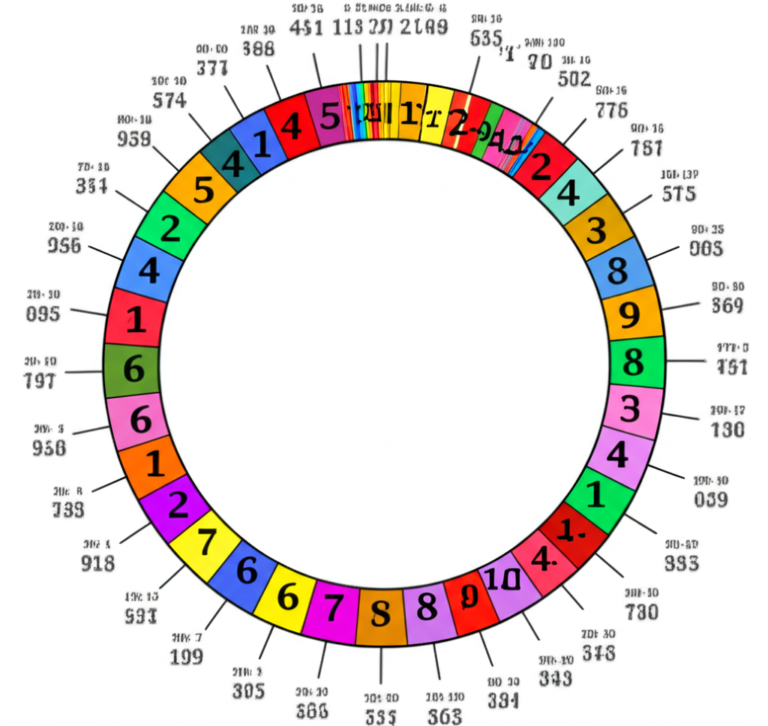
3.1415926535897932384626438327950288419716939937510…
]
Why So Many Digits?
- For everyday calculations, 3.14 or 22/7 is usually enough.
- Engineers designing microchips or aerospace components might use 3.1415926535 or more.
- Mathematicians and enthusiasts have computed trillions of digits for fun and testing algorithms.
| Digits Used | Typical Application | Why? |
|---|---|---|
| 3.14 | Basic school math, quick estimates | Simplicity and speed |
| 3.1416 | Engineering tolerances | Sufficient precision |
| 3.1415926535 | Scientific calculations, physics | High accuracy required |
| Millions+ | Algorithm testing, cryptography | Stress-testing computers |
Want to memorize pi digits? Try mnemonics like “How I want a drink…” where word lengths correspond to digits!
➗ Pi in Fractions: Approximations That Make Life Easier
Since pi is irrational, fractions only approximate it. Here are some favorites:
| Fraction | Decimal Approximation | Accuracy Level | Use Case |
|---|---|---|---|
| 22/7 | 3.142857 | Good for rough work | School math, quick estimates |
| 355/113 | 3.141592 | Very precise | Engineering, scientific work |
| 333/106 | 3.141509 | Moderate | Some engineering calculations |
| 103993/33102 | 3.14159265301 | Extremely precise | High-precision math |
These fractions are handy when you want to avoid decimals or need quick mental math.
🧮 How to Calculate Pi: Formulas, Methods, and Mind-Blowing Algorithms
Calculating pi has fascinated mathematicians for millennia. Here’s how it’s done:
1. Geometric Methods (Archimedes’ Polygon Approximation)
- Inscribe and circumscribe polygons around a circle.
- Calculate perimeters to bound pi.
- Increase polygon sides to improve accuracy.
2. Infinite Series
- Leibniz formula: (\pi = 4 \sum_{k=0}^\infty \frac{(-1)^k}{2k+1}) (slow convergence).
- Machin-like formulas: Use arctan expansions for faster convergence.
- Ramanujan’s formulas: Extremely rapid convergence, used in modern computations.
3. Monte Carlo Methods
- Randomly generate points in a square enclosing a quarter circle.
- Ratio of points inside the circle total points approximates (\pi/4).
4. Modern Algorithms
- Chudnovsky algorithm: Used for billions of digits.
- Bailey–Borwein–Plouffe (BBP) formula: Allows extraction of individual hexadecimal digits of pi without computing prior digits.
🎲 Real-Life Examples Using Pi: Circles, Spheres, and Beyond
Pi isn’t just math homework—it’s everywhere!
- Engineering: Calculating gear teeth, wheel circumferences, and circular sensor areas.
- Physics: Pendulum periods, wave mechanics, and quantum uncertainty principles.
- Computer Science: Algorithms involving circles, spheres, and trigonometric functions.
- Everyday Life: Measuring pizza sizes, circular tables, and even your Raspberry Pi’s circular cooling fans!
Example:
A circular garden has a diameter of 10 meters. What’s the circumference?
[
C = \pi \times d = 3.14159 \times 10 = 31.4159 \text{ meters}
]
That’s the distance if you walk around the garden!
❓ What Is the Exact Value of Pi and Why Is It Irrational?
Here’s the kicker: Pi has no exact decimal value. It’s an irrational number, meaning:
- It cannot be expressed as a fraction of two integers.
- Its decimal expansion never ends or repeats.
- It’s also transcendental, so it’s not a root of any algebraic equation with rational coefficients.
Why? Because the ratio of circumference to diameter involves an infinite, non-repeating decimal that defies simple expression.
This irrationality was first proven by Johann Lambert in 1768 and later, Ferdinand von Lindemann showed pi is transcendental in 1882.
📐 The Formula for Calculating Pi: Geometry Meets Infinity
The fundamental formula defining pi is:
[
\pi = \frac{C}{d}
]
But pi also appears in many beautiful formulas:
| Formula Type | Expression | Description |
|---|---|---|
| Circle circumference | (C = 2 \pi r) | Distance around a circle |
| Circle area | (A = \pi r^2) | Area enclosed by a circle |
| Sphere volume | (V = \frac{4}{3} \pi r^3) | Volume of a sphere |
| Euler’s identity | (e^{i\pi} + 1 = 0) | Links five fundamental constants |
| Probability | Probability two integers are coprime = (\frac{6}{\pi^2}) | Number theory connection |
Pi is the bridge between geometry, algebra, and even complex analysis!
🔬 Pi in Science and Technology: From Engineering Marvels to Quantum Physics
Pi’s influence extends far beyond math classes:
- Engineering: Calculating stresses in circular beams, fluid dynamics (Stokes’ law), and electrical circuits.
- Quantum Physics: Heisenberg’s uncertainty principle involves pi.
- Computer Science: Algorithms for graphics, simulations, and cryptography use pi.
- Astronomy: Calculating orbits and celestial mechanics.
- Electronics: Raspberry Pi projects often involve sensors and motors with circular components, where pi calculations ensure precision.
At Why Pi™, we love how pi connects abstract math to real-world tech!
🎉 Fun Pi Facts and Trivia That Will Surprise You
- Pi Day (March 14) matches 3.14 — a perfect excuse for pie parties!
- The Indiana Pi Bill (1897) tried to legislate pi as 3.2 — thankfully, it failed.
- The Feynman point is a sequence of six 9s starting at the 762nd decimal place.
- The Guiness World Record for memorizing pi digits is over 70,000 digits!
- Some mathematicians argue for using τ (tau) = 2π as the fundamental circle constant.
- Pi appears in the normal distribution formula, crucial in statistics.
🧠 Tips for Remembering Pi Digits: Mnemonics, Songs, and Memory Tricks
Want to impress friends or ace a math quiz? Here are some tricks:
- Piphilology: Use phrases where the number of letters in each word corresponds to a digit of pi.
Example: “How I want a drink, alcoholic of course…” = 3.1415926 - Songs: There are pi songs set to popular tunes that help memorize digits.
- Chunking: Break digits into groups of 3-4 to memorize in chunks.
- Apps: Use apps like “Pi Trainer” or “Memorize Pi Digits” on your phone.
Try these out and become a pi memorization ninja!
📚 Recommended Resources and Tools for Exploring Pi
Want to dive deeper? Check out these trusted resources:
-
Books:
-
“Pi: A Biography of the World’s Most Mysterious Number” by Alfred S. Posamentier
-
“The Joy of Pi” by David Blatner
-
Websites:
-
Videos:
-
The classic Numberphile Pi videos
-
Our own explainer on What Is Pi Value π?
-
Tools:
-
Pi calculators and digit generators online
-
Raspberry Pi kits for hands-on projects involving circular sensors and motors
💬 Leave a Comment: Share Your Pi Stories and Questions
We love hearing from you! Have you ever used pi in a cool Raspberry Pi project? Or memorized crazy digits of pi? Drop your stories, questions, or even your favorite pi jokes below. Let’s celebrate this infinite wonder together!