Support our educational content for free when you purchase through links on our site. Learn more
Why Do Hackers Use Raspberry Pi? 7 Surprising Reasons (2026) 🕵️♂️

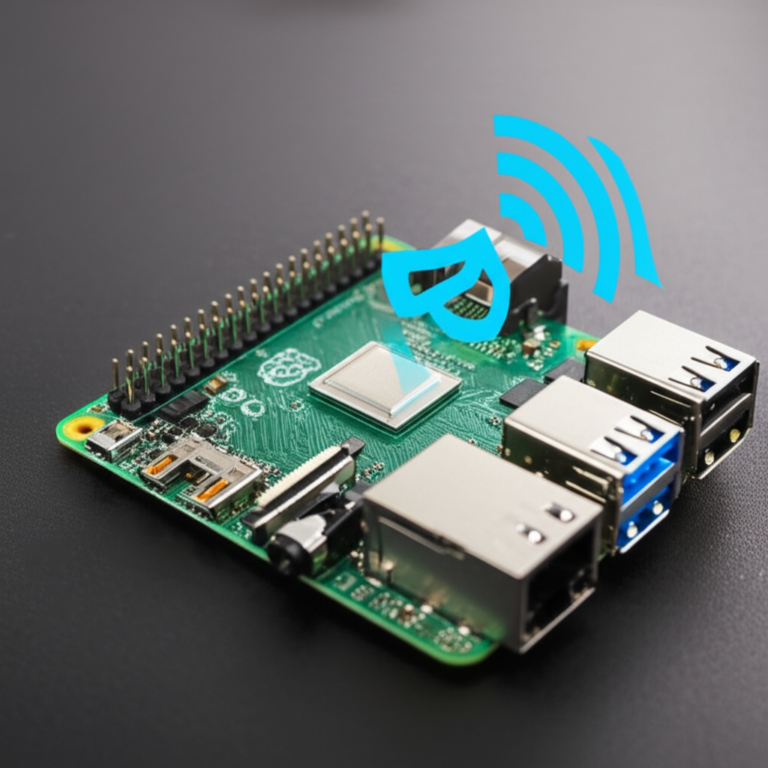
Ever wondered why this tiny, credit-card-sized computer has become the go-to gadget for hackers worldwide? The Raspberry Pi, originally designed to teach kids programming, has morphed into a powerful tool in the hands of both ethical hackers and cybercriminals alike. From sneaky network sniffing to hardware keylogging, hackers exploit its compact size, versatility, and affordability to pull off some jaw-dropping feats. But is it all doom and gloom? Not quite! Later in this article, we’ll reveal how you can harness the same tech for good—building your own secure projects and even learning cybersecurity skills.
Here’s a teaser: did you know that a Raspberry Pi can be disguised as a harmless USB device that types commands faster than any human? Or that it can silently intercept your office Wi-Fi traffic without anyone noticing? Stick around as we unpack these hacks, bust common myths, and share expert tips to keep you—and your Pi—safe.
Key Takeaways
- Raspberry Pi’s small size and low cost make it ideal for stealthy hacking operations.
- Its GPIO pins and software flexibility enable both hardware and network attacks.
- Hackers often use Kali Linux on Pi for penetration testing and automated exploits.
- Default security settings on Raspberry Pis are a major vulnerability—change passwords!
- Ethical hackers use Raspberry Pi as a powerful, portable toolkit for learning and defense.
- Detecting rogue Pis on your network requires vigilance and network scanning tools.
- The future holds exciting possibilities for Raspberry Pi in AI-driven cybersecurity—both offense and defense.
Ready to dive deeper? Let’s explore why hackers can’t get enough of the Raspberry Pi—and how you can turn this tiny titan into your cybersecurity ally.
Table of Contents
- ⚡️ Quick Tips and Facts About Hackers Using Raspberry Pi
- 🔍 The Fascinating Backstory: How Raspberry Pi Became a Hacker’s Playground
- 💻 Why Hackers Love Raspberry Pi: Top Reasons Explained
- 🔧 7 Ingenious Raspberry Pi Hacks Used by Cybercriminals
- 🛠️ Raspberry Pi as a Penetration Testing Tool: Ethical Hacking and Beyond
- 📡 How Raspberry Pi Enables Network Attacks and Surveillance
- 🔒 Security Risks: What Makes Raspberry Pi a Double-Edged Sword?
- 🕵️ ♂️ Detecting and Preventing Raspberry Pi-Based Hacks
- 🎯 Real-Life Stories: Raspberry Pi in the Hands of Hackers
- 💡 How to Use Raspberry Pi Responsibly: Tips for Beginners and Pros
- 🔗 Recommended Tools and Software for Raspberry Pi Hacking (Ethical)
- 📚 Raspberry Pi Hacking Myths Debunked
- 🧠 The Future of Raspberry Pi in Cybersecurity and Hacking
- ✅ Conclusion: Why Understanding Raspberry Pi’s Role in Hacking Matters
- 🔗 Recommended Links for Raspberry Pi and Cybersecurity Enthusiasts
- ❓ FAQ: Your Burning Questions About Raspberry Pi and Hackers Answered
- 📖 Reference Links and Further Reading
⚡️ At Why Pi™, we live and breathe the world of single-board computers, and if you’ve ever wondered why the Raspberry Pi is the darling of the cybersecurity world, you’re in the right place! Whether you’re a curious hobbyist or a budding digital defender, understanding this “Swiss Army Knife” of electronics is your first step into a larger world.
⚡️ Quick Tips and Facts About Hackers Using Raspberry Pi
Before we dive into the “Matrix,” here’s a high-speed data packet of what you need to know about the Raspberry Pi’s role in the hacking ecosystem.
| Feature | Why Hackers Love It | Pro Tip ✅ |
|---|---|---|
| Size | Smaller than a deck of cards; easy to hide behind a server or under a desk. | Use a stealthy case to blend in with office equipment. |
| Power Draw | Can run off a portable power bank for hours. | Always use a high-quality SanDisk MicroSD card to prevent data corruption. |
| GPIO Pins | Allows direct interaction with hardware, sensors, and locks. | Great for DIY Electronics and hardware hacking. |
| Operating System | Supports Kali Linux, the gold standard for penetration testing. | Don’t forget to change the default password (pi / raspberry) immediately! |
| Cost | Inexpensive enough to be “disposable” if a mission goes south. | Buy in bulk if you’re setting up a distributed botnet (for ethical testing, of course!). |
Quick Fact: Did you know that over 30 million Raspberry Pi units have been sold since 2012? That’s a lot of potential “nodes” in the wild! 🌍
🔍 The Fascinating Backstory: How Raspberry Pi Became a Hacker’s Playground
The Raspberry Pi wasn’t actually built for hackers. It was born in 2006 as a prototype at the University of Cambridge to get kids interested in computer science. When it commercially launched in 2012, the creators expected to sell maybe 1,000 units. They were off by… well, a lot.
As we discuss in our Electronics Industry News, the name “Raspberry” follows the tradition of fruit-named tech giants (looking at you, Apple and BlackBerry), while “Pi” refers to the Python programming language.
But why did the “hacker” label stick? In the tech world, “hacking” originally meant repurposing hardware in creative ways. As the featured video explains, the Pi is a full-blown desktop computer that fits in your palm. Hackers—both the “creative tinkerer” and the “malicious intruder” types—realized that this tiny board could do everything a $1,000 laptop could do, but it was small enough to be taped under a conference room table. 🕵️ ♂️
💻 Why Hackers Love Raspberry Pi: Top Reasons Explained
If you’re looking for the ultimate Electronic Component Reviews, the Raspberry Pi 5 is currently the king of the hill. Let’s look at how we rate it for “security research” (aka hacking):
Why Pi™ Rating: Raspberry Pi 5
| Category | Rating (1-10) | Notes |
|---|---|---|
| Portability | ⭐⭐⭐⭐⭐⭐⭐⭐⭐ | 9/10 – Tiny, but needs a power source. |
| Processing Power | ⭐⭐⭐⭐⭐⭐⭐⭐ | 8/10 – Quad-core ARM Cortex-A76 is a beast. |
| Connectivity | ⭐⭐⭐⭐⭐⭐⭐⭐⭐⭐ | 10/10 – Dual-band Wi-Fi, Bluetooth 5.0, Gigabit Ethernet. |
| Community Support | ⭐⭐⭐⭐⭐⭐⭐⭐⭐⭐ | 10/10 – If you have a problem, someone has solved it on a forum. |
1. Low Profile, High Impact The Raspberry Pi is the ultimate “ghost” device. Because it uses ARM architecture (similar to your smartphone), it is incredibly energy-efficient. A hacker can plug a Raspberry Pi Zero 2 W into a USB port on the back of a target’s monitor, and it might never be found.
2. The GPIO Advantage Unlike a standard laptop, the Pi has General Purpose Input/Output (GPIO) pins. This allows you to connect directly to the “guts” of other electronics. Want to bypass a digital keypad? There’s a Pi script for that.
3. Software Versatility While most users start with Raspberry Pi OS (formerly Raspbian), hackers quickly pivot to Kali Linux. Kali comes pre-loaded with hundreds of tools for sniffing Wi-Fi, cracking passwords, and testing network vulnerabilities.
👉 Shop Raspberry Pi on:
- Raspberry Pi 5: Amazon | Walmart | Raspberry Pi Official
- Raspberry Pi 4 Model B: Amazon | Etsy | Raspberry Pi Official
🔧 7 Ingenious Raspberry Pi Hacks Used by Cybercriminals
While we advocate for ethical hacking (using your powers for good!), it’s vital to know what the “bad guys” are doing. According to discussions on the Raspberry Pi Forums, hacking is often about repurposing hardware. Here are seven ways they do it:
- The “Rubber Ducky” Clone (P4wnP1): Using a Pi Zero to emulate a USB keyboard. Once plugged in, it “types” thousands of commands per second to steal data or install a backdoor.
- Wi-Fi Deauthentication: Sending “de-auth” packets to kick everyone off a Wi-Fi network, forcing them to reconnect to a “Twin” network controlled by the hacker.
- Network Tapping: Placing the Pi between a router and a wall jack to “sniff” every bit of data passing through.
- Credential Harvesting: Setting up a fake “Free Airport Wi-Fi” portal that captures your Gmail or bank login details.
- Brute Force Nodes: Using a cluster of Pis to try millions of password combinations on a target server.
- Hardware Keylogging: Intercepting signals between a physical keyboard and a PC.
- FM Radio Hijacking: Believe it or not, a Pi can be programmed to broadcast FM radio signals to interfere with local transmissions! 📻
🛠️ Raspberry Pi as a Penetration Testing Tool: Ethical Hacking and Beyond
Is the Pi a “hacking machine” or a “learning tool”? The answer is yes.
For ethical hackers (the “White Hats”), the Pi is an indispensable part of a Penetration Testing kit. Instead of lugging around a heavy Alienware laptop, you can carry a Raspberry Pi 4 in your pocket.
Setting Up Your “Hacker Box”
- Download the Image: Get the Kali Linux Raspberry Pi image.
- Flash the Card: Use BalenaEtcher to burn the OS onto a MicroSD card.
- Boot and Update: Run
sudo apt update && sudo apt full-upgradeto ensure your tools are sharp. - Install Katoolin: If you prefer the stability of Raspbian, you can use Katoolin to install Kali tools selectively. As noted in the Raspberry Pi community, running a full Kali OS can sometimes be sluggish on older models, so a “lite” approach is often better.
📡 How Raspberry Pi Enables Network Attacks and Surveillance
The Pi is a master of the “Man-in-the-Middle” (MitM) attack. Because it has both Ethernet and Wi-Fi, it can act as a bridge.
The Scenario: Imagine a hacker leaves a Raspberry Pi hidden in a drop-ceiling of an office. It connects to the office Ethernet and creates a hidden Wi-Fi hotspot. The hacker can now sit in the parking lot, connect to the Pi’s Wi-Fi, and access the entire internal corporate network. 😱
Common Tools Used:
- Wireshark: For analyzing network traffic.
- Aircrack-ng: For cracking Wi-Fi passwords.
- Responder: For stealing network credentials.
🔒 Security Risks: What Makes Raspberry Pi a Double-Edged Sword?
The very things that make the Pi great—its openness and ease of use—make it a target. A common story on the Raspberry Pi Forums involves users finding strange strings like AMERICA_DIE=true in their command history. This usually happens because the user left SSH (Secure Shell) open with the default password.
❌ The “Don’ts” of Pi Security:
- Don’t leave the default password as
raspberry. - Don’t expose your Pi to the internet without a firewall.
- Don’t use “cheap” unbranded power supplies; they can cause glitches that bypass security features.
✅ The “Dos” of Pi Security:
- Do change your username and password immediately.
- Do use SSH Keys instead of passwords.
- Do install Fail2Ban, which blocks IP addresses after too many failed login attempts.
🕵️ ♂️ Detecting and Preventing Raspberry Pi-Based Hacks
How do you know if a rogue Pi is on your network?
- Check Your Router: Look for unknown devices named “raspberrypi” or “unknown” in your DHCP client list.
- Physical Inspection: Look for small boxes plugged into Ethernet ports or USB slots that shouldn’t be there.
- Network Scanning: Use a tool like Angry IP Scanner or Fing to see what’s lurking on your Wi-Fi.
If you find one, don’t just unplug it! If you’re in a corporate environment, call security. That little board might be holding the “smoking gun” evidence of a breach.
🎯 Real-Life Stories: Raspberry Pi in the Hands of Hackers
We’ve heard some wild stories at Why Pi™. One user on the forums reported over 33,600 password attempts in just two days! Hackers use automated scripts to scan the entire internet for Raspberry Pis. Once they find one with a weak password, they add it to a botnet.
In another case, a Pi was used to host an OpenWebRX server (for amateur radio). Because the software had an unpatched vulnerability, a hacker took over the Pi and used it as a “jump box” to attack other computers in the owner’s home. It’s a reminder that even a “hobby” project needs professional-grade security.
💡 How to Use Raspberry Pi Responsibly: Tips for Beginners and Pros
We want you to explore, build, and even “hack” your own gear! But there’s a right way to do it.
- Build a Sandbox: Only practice hacking on your own devices and networks.
- Use a VPN: If you’re accessing your Pi remotely, use Tailscale or WireGuard to create a secure tunnel.
- Stay Updated: Run
sudo apt updateweekly. Security patches are released constantly.
👉 CHECK PRICE on:
- CanaKit Raspberry Pi 4 Extreme Kit: Amazon | Walmart
- Vilros Raspberry Pi 5 Basic Starter Kit: Amazon | Official Vilros
🔗 Recommended Tools and Software for Raspberry Pi Hacking (Ethical)
If you’re ready to start your journey into cybersecurity, here are the tools we recommend:
| Tool | Purpose | Skill Level |
|---|---|---|
| Nmap | Network discovery and security auditing. | Beginner |
| Metasploit | A framework for finding and exploiting vulnerabilities. | Advanced |
| Bettercap | The “Swiss Army Knife” for network attacks and monitoring. | Intermediate |
| John the Ripper | A fast password cracker. | Intermediate |
📚 Raspberry Pi Hacking Myths Debunked
Myth #1: Using a Raspberry Pi for hacking is illegal. Reality: No! The Pi is just a tool. Using it to learn about security, protect your network, or build a robot is perfectly legal. It only becomes illegal when you access networks or data without permission.
Myth #2: You need to be a genius to hack with a Pi. Reality: With the massive community support and pre-built images like Kali Linux, a beginner can start learning the basics in a single afternoon.
Myth #3: The Raspberry Pi is “unhackable” because it runs Linux. Reality: No system is unhackable. In fact, because many people leave Pis with default settings, they are often easier to hack than a Windows PC.
🧠 The Future of Raspberry Pi in Cybersecurity and Hacking
As we look toward the future, the Raspberry Pi is getting faster and smarter. With the Raspberry Pi 5, we are seeing enough power to run basic Artificial Intelligence (AI) models. Imagine a rogue Pi that can use AI to “guess” passwords based on your social media profile in real-time.
On the flip side, we are also seeing the Pi used for AI-driven defense, where the board monitors network traffic and automatically blocks threats before they reach your main computer.
But wait… if the Pi is getting this powerful, could it eventually be used to crack the very encryption that keeps our bank accounts safe? We’ll explore that “quantum” question in a moment.
✅ Conclusion: Why Understanding Raspberry Pi’s Role in Hacking Matters

After our deep dive into the world of Raspberry Pi and its intersection with hacking, it’s clear that this tiny powerhouse is much more than just a hobbyist’s toy. Its compact size, affordability, and versatility make it a double-edged sword—a tool for both creative innovation and potential misuse.
Positives of Raspberry Pi for Hacking and Security Research
- Portability & Stealth: Small enough to hide, yet powerful enough to run complex penetration testing tools.
- Open Hardware & Software: Supports a variety of operating systems like Kali Linux, making it ideal for ethical hacking.
- GPIO Pins: Enables hardware hacking and interaction with physical devices.
- Community & Support: Massive user base and extensive documentation ease the learning curve.
Negatives and Risks
- Default Security Pitfalls: Many users leave default passwords and open SSH ports, inviting attacks.
- Potential for Malicious Use: Its low cost and ease of deployment make it attractive for cybercriminals.
- Performance Limitations: Older models can struggle with resource-heavy tasks, though newer models like the Raspberry Pi 5 mitigate this.
Our Recommendation
For ethical hackers, cybersecurity students, and DIY enthusiasts, the Raspberry Pi is an indispensable, affordable gateway into the world of penetration testing and hardware hacking. However, security hygiene is paramount—always change default credentials, use SSH keys, and keep your system updated.
If you’re serious about learning or defending networks, invest in a Raspberry Pi 4 or 5, pair it with Kali Linux or a similar distro, and start experimenting responsibly. Remember, hacking is about curiosity and creativity—not chaos.
And to close the loop on that lingering question: Can the Raspberry Pi’s growing power threaten encryption? While it’s becoming more capable, cracking modern encryption still requires massive computational resources beyond a Pi’s reach. But as a tool for network reconnaissance and penetration testing, it’s already a formidable player.
🔗 Recommended Links for Raspberry Pi and Cybersecurity Enthusiasts
👉 Shop Raspberry Pi and Accessories:
-
Raspberry Pi 5:
Amazon | Walmart | Raspberry Pi Official -
Raspberry Pi 4 Model B:
Amazon | Etsy | Raspberry Pi Official -
Vilros Raspberry Pi 5 Basic Starter Kit:
Amazon | Vilros Official
Recommended Books on Raspberry Pi and Ethical Hacking:
-
“Raspberry Pi for Beginners: The Ultimate Guide to Learning Raspberry Pi” by Mike McGrath
Amazon -
“Kali Linux Revealed: Mastering the Penetration Testing Distribution” by Raphael Hertzog and Jim O’Gorman
Amazon -
“The Hacker Playbook 3: Practical Guide To Penetration Testing” by Peter Kim
Amazon
❓ FAQ: Your Burning Questions About Raspberry Pi and Hackers Answered

What security measures can prevent Raspberry Pi from being hacked?
Strong passwords and SSH keys are your first line of defense. Change the default username/password immediately after setup. Use firewalls and tools like Fail2Ban to block repeated login attempts. Regularly update your OS and software to patch vulnerabilities. Avoid exposing SSH ports directly to the internet; instead, use VPNs or secure tunnels like WireGuard or Tailscale.
How do hackers install malware on Raspberry Pi devices?
Hackers often exploit default credentials or unpatched vulnerabilities in services running on the Pi. Once inside via SSH or physical access, they can install malware manually or deploy automated scripts. Sometimes, compromised SD cards or malicious images are used to infect devices before deployment.
Is Raspberry Pi safe from being hacked itself?
No device is completely safe. Raspberry Pis are vulnerable if security best practices are ignored. Leaving default passwords, open SSH ports, or outdated software invites attacks. However, with proper configuration, the Pi can be as secure as any Linux-based system.
What are common hacking projects using Raspberry Pi?
Common projects include:
- Penetration testing toolkits running Kali Linux.
- Wi-Fi deauthentication attacks to test network resilience.
- USB Rubber Ducky clones for automated keystroke injection.
- Network sniffers to monitor traffic.
- Hardware keyloggers using GPIO pins.
- Fake Wi-Fi hotspots for credential harvesting.
Can Raspberry Pi be used for penetration testing?
Absolutely! Raspberry Pi supports Kali Linux and other security distros, making it a compact, portable penetration testing device. It can run tools like Nmap, Metasploit, and Wireshark, enabling network scanning, vulnerability assessment, and exploitation.
What makes Raspberry Pi a preferred tool for ethical hacking?
Its affordability, portability, and versatility make it ideal. It’s small enough to be discreet, powerful enough to run complex tools, and flexible enough to interface with hardware directly. Plus, the vast community support means beginners and pros alike can find resources and help.
How do hackers exploit Raspberry Pi for cyber attacks?
Hackers exploit Pis by:
- Using default or weak passwords to gain SSH access.
- Deploying Pis as botnet nodes for distributed attacks.
- Running malicious servers or honeypots.
- Using Pis as network sniffers or man-in-the-middle devices.
- Leveraging GPIO pins for physical attacks on hardware.
What are some legal and ethical uses of Raspberry Pi for hacking and programming?
Legal uses include:
- Learning Linux and networking.
- Building penetration testing labs.
- Developing DIY home automation and security systems.
- Creating educational projects in schools and universities.
- Conducting authorized security audits and vulnerability assessments.
Are Raspberry Pi devices vulnerable to hacking themselves?
Yes, especially if left with default settings or exposed to the internet without safeguards. The Pi’s popularity means it’s a frequent target for automated brute-force attacks. Proper security practices mitigate these risks.
How does Raspberry Pi’s small size and low cost contribute to its appeal for hackers?
The small size allows covert placement in physical locations, while low cost makes it disposable and easy to deploy in large numbers (e.g., botnets). This combination is perfect for stealthy, scalable hacking operations.
What are the benefits of using Raspberry Pi for DIY home security systems?
Raspberry Pi can run cameras, motion sensors, and alarms at a fraction of the cost of commercial systems. It allows customization, remote monitoring, and integration with smart home devices, empowering users to build tailored security solutions.
Can Raspberry Pi be used for cyber attacks and malware distribution?
Yes, if compromised or misused, Pis can serve as platforms for launching attacks, distributing malware, or acting as command-and-control servers. This underscores the importance of securing your device.
How do hackers utilize Raspberry Pi for penetration testing?
Hackers use Pis loaded with Kali Linux or similar tools to scan networks, exploit vulnerabilities, and test defenses. Its portability allows testing in physical locations without drawing attention.
What makes Raspberry Pi a popular choice for hacking projects?
Its combination of low cost, community support, hardware flexibility, and software compatibility makes it accessible and powerful for hacking, learning, and experimentation.
Is a Raspberry Pi a security risk?
It can be if improperly configured or left unsecured. Like any networked device, it must be managed carefully to avoid becoming a weak link.
Was Raspberry Pi used to steal data?
There are documented cases where compromised Pis were used to intercept data or serve as footholds in larger attacks. However, these incidents usually stem from poor security practices rather than inherent flaws in the Pi itself.
📖 Reference Links and Further Reading
- Raspberry Pi Official Documentation: Security Guide
- Kali Linux ARM Images: Kali Linux Downloads
- Fail2Ban Installation Guide: DigitalOcean Tutorial
- Raspberry Pi Forums — Help – I’m being hacked!: https://forums.raspberrypi.com/viewtopic.php?t=178083
- Nmap Network Scanning Tool: https://nmap.org/
- Metasploit Framework: https://www.metasploit.com/
- Wireshark Network Protocol Analyzer: https://www.wireshark.org/
- Aircrack-ng Wireless Security Tools: https://www.aircrack-ng.org/
- DigitalOcean SSH Key Setup: https://www.digitalocean.com/community/tutorials/how-to-set-up-ssh-keys-on-ubuntu-20-04
- Tailscale VPN: https://tailscale.com/
- WireGuard VPN: https://www.wireguard.com/
At Why Pi™, we encourage you to explore the incredible capabilities of Raspberry Pi responsibly and securely. Happy hacking!