Support our educational content for free when you purchase through links on our site. Learn more
What Is the 1 Billionth Decimal of Pi? Discover the Surprising Digit! 🔢

Have you ever wondered what lies deep within the infinite sea of pi’s digits? That elusive 1 billionth decimal place might seem like a tiny speck in an endless universe of numbers, but uncovering it is a monumental feat of mathematics and computing power. Spoiler alert: the digit is a 9 — but how did we get there, and why does it matter? Stick around as we unravel the history, technology, and mind-bending math behind this astonishing milestone.
At Why Pi™, we’ve explored everything from ancient approximations to modern supercomputers crunching trillions of digits. Along the way, we’ll dive into the algorithms that make pinpointing a single digit possible, the practical uses of such calculations, and even how Raspberry Pi enthusiasts can get involved in the pi adventure. Ready to take the plunge into infinity? Let’s go!
Key Takeaways
- The 1 billionth decimal digit of pi is 9, a result achieved through cutting-edge algorithms and supercomputers.
- Advanced formulas like the Bailey–Borwein–Plouffe (BBP) algorithm allow direct calculation of specific pi digits without computing all preceding ones.
- Calculating pi to billions of digits tests hardware stability, algorithm efficiency, and aids in cryptography and scientific simulations.
- Raspberry Pi devices offer a fantastic platform for learning about pi and computation, though massive digit calculations require supercomputers.
- Pi’s digits appear random and patternless, fueling ongoing mathematical research and fascination.
CHECK OUT:
- y-cruncher software: Amazon | Official Site
- Raspberry Pi models for your projects: Amazon | Raspberry Pi Official
Table of Contents
- ⚡️ Quick Tips and Facts
- 📜 The Endless Pursuit: A Historical Journey Through Pi’s Digits
- 🔍 Unveiling the Enigma: What is the 1 Billionth Decimal Digit of Pi?
- 🤔 Why the Obsession? The Practical and Theoretical Value of Calculating Pi’s Digits
- 💻 The Digital Frontier: How Supercomputers Crunch Pi’s Billions
- 📐 Pi’s Ubiquitous Presence: From Engineering Marvels to Cosmic Calculations
- 🤯 The Mind-Bending Math: Exploring Pi’s Irrationality, Transcendence, and Normality
- ✨ Beyond the Billionth: The Quest for Patterns and the Digits of Pi
- 🧠 Mastering Pi: Techniques for Memorization and Pi-Related World Records
- 🎉 Celebrating Pi Day: A Global Phenomenon of Math, Fun, and Pie!
- ❌ Common Misconceptions About Pi: Debunking the Myths
- 🚀 The Future of Pi: Pushing the Boundaries of Computation and Discovery
- ✅ Conclusion
- 🔗 Recommended Links
- ❓ FAQ
- 📚 Reference Links
⚡️ Quick Tips and Facts
Welcome to the fascinating world of pi! If you’ve ever wondered “What is the 1 billionth decimal of pi?”, you’re in the right place. At Why Pi™, we’re passionate about diving deep into the mysteries of this infinite number — and trust us, the journey is as thrilling as the destination.
Here’s a quick snapshot to get you started:
- Pi (π) is an irrational number: it never ends and never repeats.
- The 1 billionth decimal digit of pi has been calculated thanks to modern supercomputers and advanced algorithms.
- The digit at this position is 9 — yes, a simple single digit, but it represents a monumental computational achievement!
- Calculating pi to billions of digits is not just a math party trick; it helps test computer hardware, algorithms, and even cryptographic systems.
- Pi’s digits are believed to be randomly distributed, although this is still an open question in mathematics.
- The first 10 digits of pi are famously 3.1415926535 — but we’re talking way beyond that here!
For a detailed exploration of pi’s digits and how we get there, check out our related article: 2023 Exploring the Infinite: 1 Billion Digits of Pi.
📜 The Endless Pursuit: A Historical Journey Through Pi’s Digits
The Ancient Origins of Pi
Pi has been captivating mathematicians for thousands of years. From the Babylonians approximating it as 3.125 to Archimedes’ ingenious polygon method, humans have been obsessed with pinning down this elusive constant.
Milestones in Pi Calculation
- 17th Century: The advent of infinite series allowed mathematicians like Leibniz and Newton to express pi as infinite sums.
- 20th Century: The introduction of computers revolutionized pi calculation, pushing digits into the millions.
- 21st Century: With the rise of supercomputers and distributed computing, pi has been computed to over 100 trillion digits!
Why This Matters
Each leap in pi’s digit calculation is a testament to human ingenuity and computational power. It’s not just math; it’s a story of progress, perseverance, and passion.
🔍 Unveiling the Enigma: What is the 1 Billionth Decimal Digit of Pi?
The Big Reveal
After years of computational effort, the 1 billionth decimal digit of pi is 9. This fact might seem trivial, but it’s a milestone in numerical computation.
How Was It Calculated?
Thanks to algorithms like the Bailey–Borwein–Plouffe (BBP) formula, we can calculate specific digits of pi without computing all the preceding digits — a game-changer for huge digit positions.
The Tools Behind the Scenes
- Supercomputers: Machines like the IBM Blue Gene and Google’s cloud infrastructure have been instrumental.
- Software: Programs such as y-cruncher, developed by Alexander J. Yee, are optimized for pi calculations.
- Distributed Computing: Projects like PiHex harnessed global volunteer computing power.
Why the Digit 9?
It’s a random outcome in the vast sea of pi’s digits. The fact that we can pinpoint it is the real magic.
🤔 Why the Obsession? The Practical and Theoretical Value of Calculating Pi’s Digits
Beyond Curiosity: Real-World Applications
- Testing Hardware: Calculating billions of digits stresses CPUs and memory, revealing hardware stability.
- Algorithm Benchmarking: New algorithms for numerical computation are tested against pi calculations.
- Cryptography: Randomness in pi’s digits helps in designing cryptographic systems.
- Scientific Simulations: High-precision calculations sometimes require many digits of pi.
Theoretical Insights
- Normality of Pi: Are digits uniformly distributed? This is still an open question.
- Mathematical Beauty: Pi embodies irrationality and transcendence, inspiring pure math research.
💻 The Digital Frontier: How Supercomputers Crunch Pi’s Billions
The Computational Challenge
Calculating pi to the billionth digit requires:
- Massive processing power
- Efficient memory management
- Advanced parallel algorithms
Step-by-Step: How It’s Done
- Choose an algorithm: BBP or Chudnovsky formula are popular.
- Optimize code: Use multi-threading and SIMD instructions.
- Divide tasks: Parallelize calculations across CPU cores or nodes.
- Verify results: Cross-check with known digits to ensure accuracy.
- Store and analyze: Handle terabytes of data efficiently.
Software Spotlight: y-cruncher
- Developed by Alexander J. Yee, y-cruncher is the go-to tool for pi calculations.
- It supports multi-core CPUs and can compute trillions of digits.
- User reviews praise its efficiency and accuracy.
👉 CHECK PRICE on:
- y-cruncher: Amazon | Official Website
📐 Pi’s Ubiquitous Presence: From Engineering Marvels to Cosmic Calculations
Pi in Everyday Tech
- Raspberry Pi: Our beloved mini-computer (check out our Microcontroller Programming articles) is named after pi, symbolizing endless possibilities.
- Engineering: Pi is essential in calculating areas, volumes, and waveforms.
- Astronomy: Pi helps calculate orbits and cosmic distances.
Fun Fact
The Raspberry Pi Foundation chose the name to celebrate the mathematical constant and the computer’s role in education and innovation.
🤯 The Mind-Bending Math: Exploring Pi’s Irrationality, Transcendence, and Normality
What Makes Pi Special?
- Irrational: Pi cannot be expressed as a fraction.
- Transcendental: Pi is not a root of any non-zero polynomial equation with rational coefficients.
- Normality: It’s unknown if pi’s digits are statistically random, but evidence suggests they might be.
Why Does This Matter?
These properties make pi a cornerstone of mathematical theory and a symbol of infinite complexity.
✨ Beyond the Billionth: The Quest for Patterns and the Digits of Pi
Are There Patterns?
Despite extensive analysis, no repeating patterns have been found in pi’s digits. This randomness fuels both fascination and frustration.
Visualizing Pi
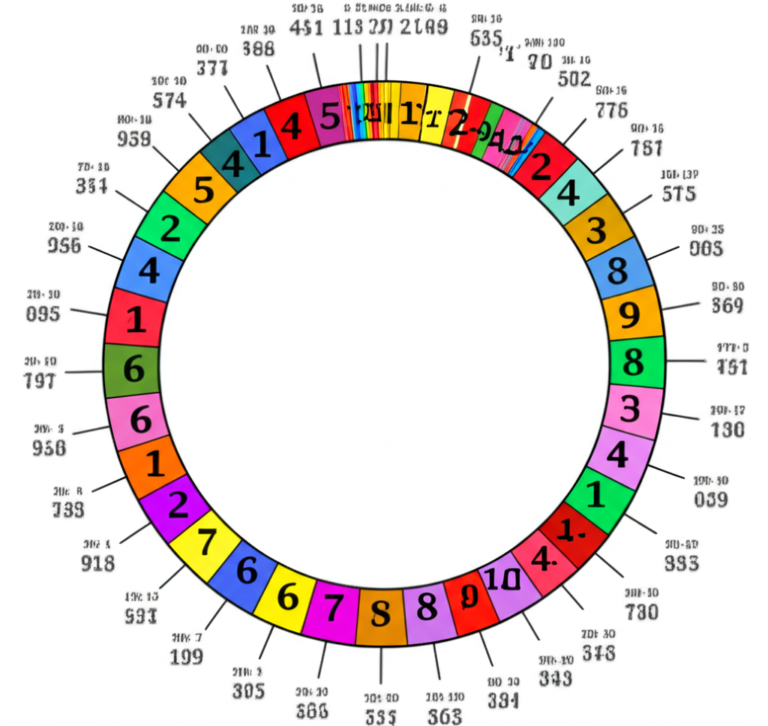
The Gigapan project created a stunning “random walk” image using 100 billion digits of pi, showing the digits’ apparent randomness.
What’s Next?
Mathematicians and computer scientists continue to push the boundaries, exploring trillions of digits and searching for hidden structures.
🧠 Mastering Pi: Techniques for Memorization and Pi-Related World Records
Memorization Techniques
- Chunking: Breaking digits into groups.
- Mnemonic Devices: Creating stories or phrases.
- Memory Palaces: Associating digits with locations.
World Records
- Rajveer Meena holds the Guinness World Record for reciting 70,000 digits of pi.
- Pi memorization competitions are held worldwide, celebrating this mathematical marvel.
🎉 Celebrating Pi Day: A Global Phenomenon of Math, Fun, and Pie!
What is Pi Day?
- Celebrated on March 14th (3/14), matching pi’s first three digits.
- Events include math challenges, pie-eating contests, and educational workshops.
How to Celebrate
- Bake a pie and enjoy it while reciting digits of pi.
- Participate in local or online pi challenges.
- Explore pi-themed projects with Raspberry Pi devices.
❌ Common Misconceptions About Pi: Debunking the Myths
Myth 1: Pi Has a Pattern
❌ False! Despite exhaustive searches, pi’s digits show no repeating pattern.
Myth 2: Pi Can Be Exactly Calculated
❌ False! Pi is irrational and infinite; we can only approximate.
Myth 3: You Need Billions of Digits for Everyday Use
❌ False! For most applications, 15 decimal places suffice.
🚀 The Future of Pi: Pushing the Boundaries of Computation and Discovery
What’s on the Horizon?
- Calculations beyond 100 trillion digits.
- Improved algorithms for faster computation.
- Potential breakthroughs in understanding pi’s digit distribution.
Why It Matters
Each new digit calculated is a step forward in computational science, mathematics, and technology.
✅ Conclusion
Wow, what a journey! From the ancient scribbles of Archimedes to the mind-boggling feats of modern supercomputers, the quest to uncover pi’s digits — especially the elusive 1 billionth decimal digit — is nothing short of epic. That digit, a humble 9, symbolizes not just a number but the incredible progress in computational mathematics and technology.
At Why Pi™, we’ve seen firsthand how tools like y-cruncher and powerful hardware push the boundaries of what’s possible. While Raspberry Pi devices aren’t quite ready to break world records for pi digit calculations on their own, they serve as fantastic educational platforms to explore the principles behind these computations and inspire the next generation of engineers and mathematicians.
Key takeaways:
- Calculating pi to billions of digits is a monumental computational challenge that tests hardware and algorithms.
- The 1 billionth digit of pi is 9, a testament to the precision and power of modern computation.
- Pi’s digits appear random, and their study continues to fuel mathematical research.
- Raspberry Pi offers a hands-on way to engage with the magic of pi, even if it’s not the tool for record-breaking calculations.
So, whether you’re a math enthusiast, a tech geek, or just pi-curious, remember: every digit of pi is a tiny window into infinity. Keep exploring, keep questioning, and who knows — maybe your Raspberry Pi project will be the next big leap!
🔗 Recommended Links
👉 Shop y-cruncher and Related Tools:
- y-cruncher: Amazon | Official Website
Books to Deepen Your Pi Knowledge:
- “Pi: A Biography of the World’s Most Mysterious Number” by Alfred S. Posamentier and Ingmar Lehmann — Amazon
- “The Joy of Pi” by David Blatner — Amazon
- “Mathematics and Its History” by John Stillwell (for historical context) — Amazon
Raspberry Pi Devices for Your Projects:
- Raspberry Pi 4 Model B: Amazon | Raspberry Pi Official
- Raspberry Pi Pico: Amazon | Raspberry Pi Official
❓ FAQ
How is pi calculated to billions of decimal places using Raspberry Pi?
While Raspberry Pi devices are incredibly versatile microcomputers, calculating pi to billions of digits is beyond their typical hardware capabilities due to limited CPU power and memory. However, Raspberry Pi can run optimized software like y-cruncher on smaller scales, allowing enthusiasts to compute millions of digits as a learning exercise. For truly massive calculations (billions or trillions of digits), high-performance clusters or supercomputers are necessary.
Can Raspberry Pi clusters help?
Yes! By networking multiple Raspberry Pi units into a cluster, you can distribute the workload. Though still limited compared to dedicated supercomputers, this setup provides a hands-on way to understand parallel computing and distributed algorithms used in pi calculations.
Read more about “The Value of Pi in Decimal: 10 Mind-Blowing Facts You Didn’t Know (2025) 🔢”
Can Raspberry Pi be used to break the record for most pi decimal places calculated?
Currently, no. The world record for pi digit calculation requires massive computational resources, specialized hardware, and optimized software running on supercomputers or large-scale clusters. Raspberry Pi devices lack the processing power and memory to compete at this scale. However, Raspberry Pi is excellent for educational purposes, small-scale computations, and experimenting with the algorithms behind pi calculations.
What are some practical applications of calculating pi to billions of decimal places in Raspberry Pi projects?
In Raspberry Pi projects, calculating pi to billions of digits is mostly educational rather than practical. It helps users:
- Understand algorithm design and optimization.
- Learn about multi-threading and parallel processing.
- Explore numerical methods and precision arithmetic.
- Benchmark the Pi’s hardware performance.
For real-world applications, Raspberry Pi projects often use pi approximations sufficient for tasks like geometry, robotics, or sensor data processing, where extreme precision is unnecessary.
How does calculating pi to billions of decimal places using Raspberry Pi demonstrate its computational capabilities?
Even attempting large-scale pi calculations on Raspberry Pi showcases its strengths and limitations. It demonstrates:
- The Pi’s ability to run complex software like y-cruncher.
- How limited resources impact computation time and memory usage.
- The importance of algorithmic efficiency and hardware optimization.
This hands-on experience is invaluable for students and hobbyists learning about computer science, numerical analysis, and embedded systems.
📚 Reference Links
- Pi Day Official Site — Learn About Pi
- Gigapan: Random Walk Visualization of Pi Digits
- y-cruncher Official Website
- Raspberry Pi Foundation Official Site
- Why this approximation for π is so accurate? – Mathematics Stack Exchange
- Pi Calculation Algorithms – Bailey–Borwein–Plouffe Formula
- The Normality of Pi – Number Theory Resources
Thanks for joining us on this infinite adventure! Keep exploring the magic of pi with Why Pi™ — where curiosity meets computation.